Carbide Snow Plow Blades Built for Harsh Winter Roads
We press, sinter and weld tungsten carbide edges in Rayong, Thailand, then ship them to fleets and OEMs who would rather not stop the truck mid-storm.
- 10–20× the service life of steel edges
- Custom lengths, grades and edge profiles
- Batch traceability from powder to packing
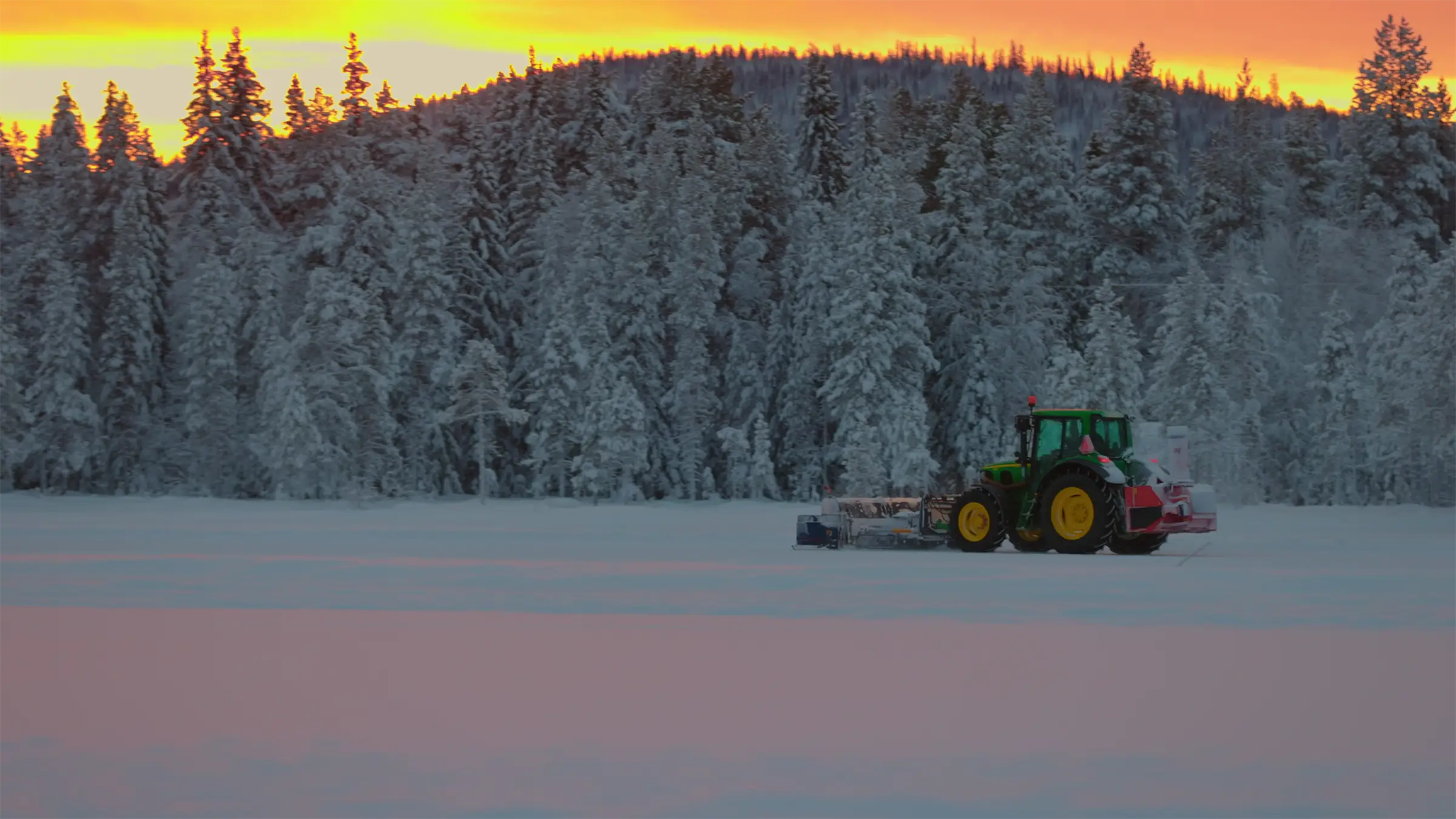
Four edge systems, one wear-parts supply chain
Choose the cutting edge by surface, machine and season. Every option is produced in our own plant, so the grade and the geometry stay the same order after order.
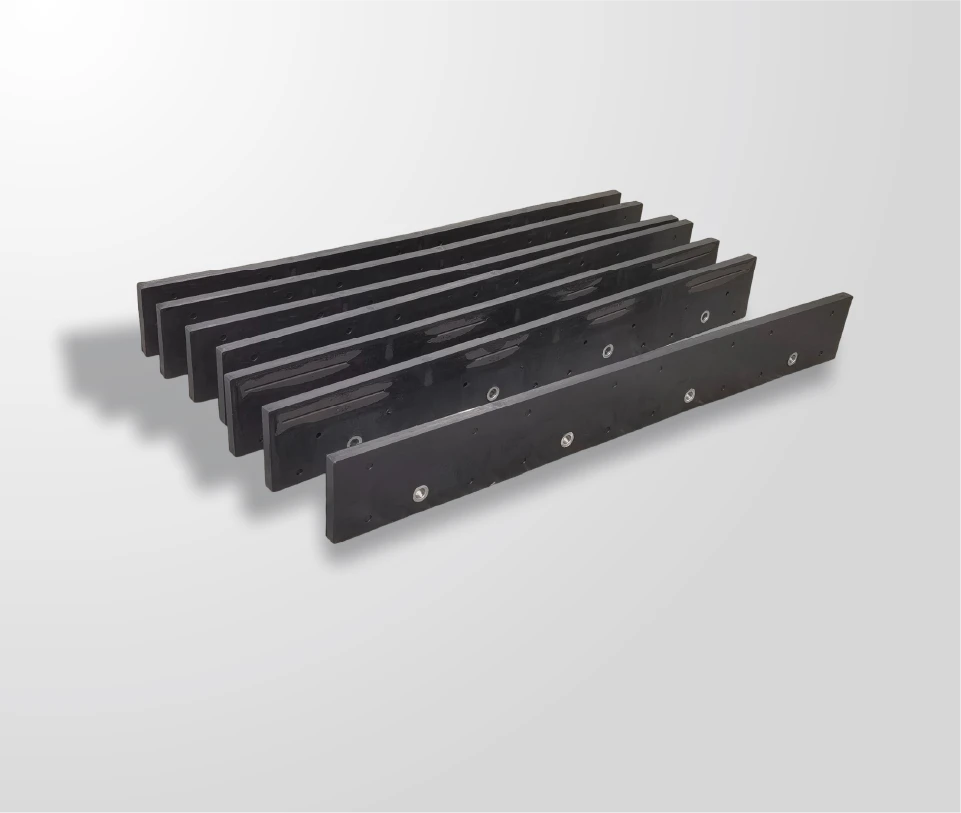
JOMA Style Blade — Rubber-Flex Edge with Carbide Wear Segments
A rubber-flex body carrying carbide wear segments: the edge that clears the lot without marking it.
- EdgeRubber-flex
- BestCommercial lots
- LifeLong wear
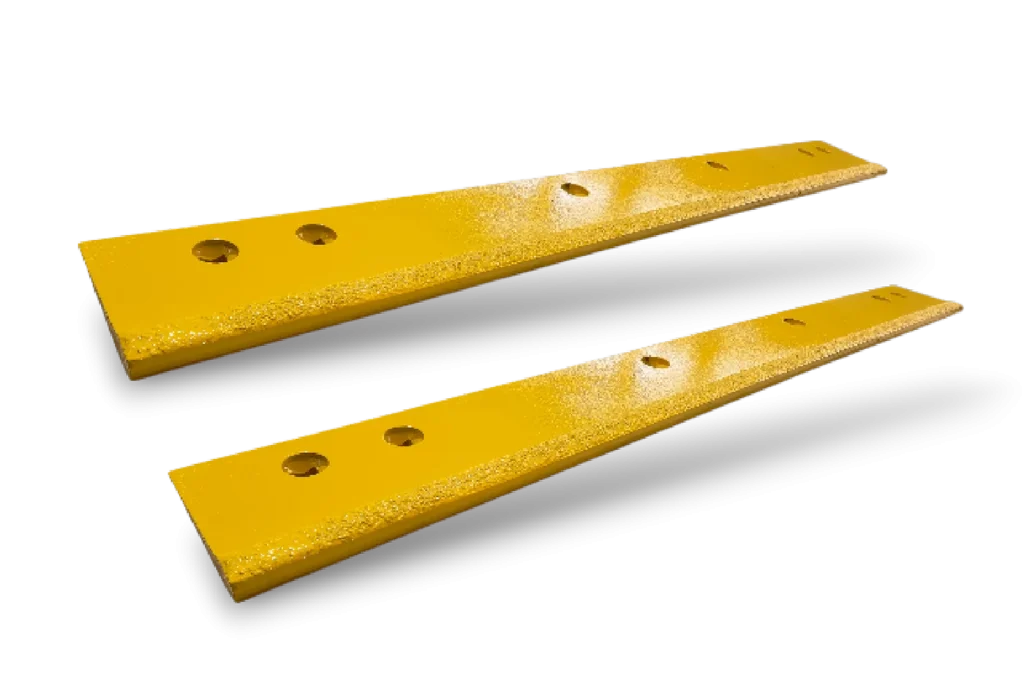
Carbide Snow Plow Blade for Highway and Municipal Fleets
The working edge for asphalt and chip seal: tungsten carbide on a steel carrier, specified to your machine.
- EdgeTungsten carbide
- BestHighway & municipal
- Life10–20× steel
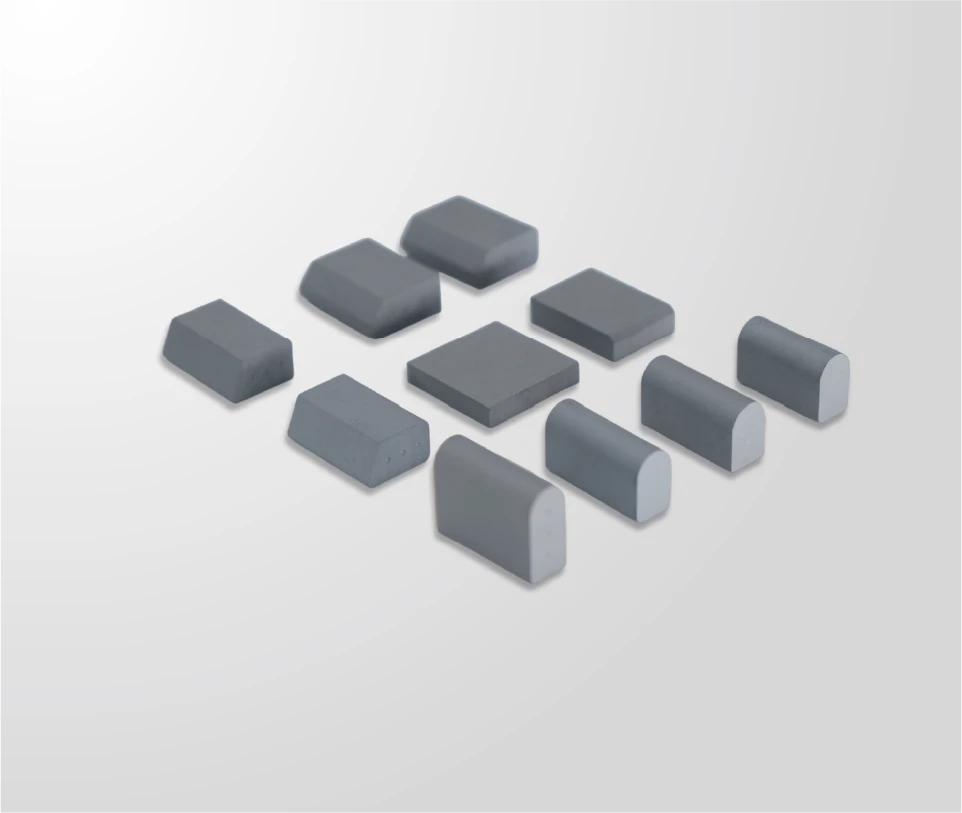
Tungsten Carbide Inserts for Snow Plow Edges
Sintered inserts and edge strips for fleets that service edges instead of replacing them.
- EdgeReplaceable insert
- BestTender & retrofit
- LifeServiceable
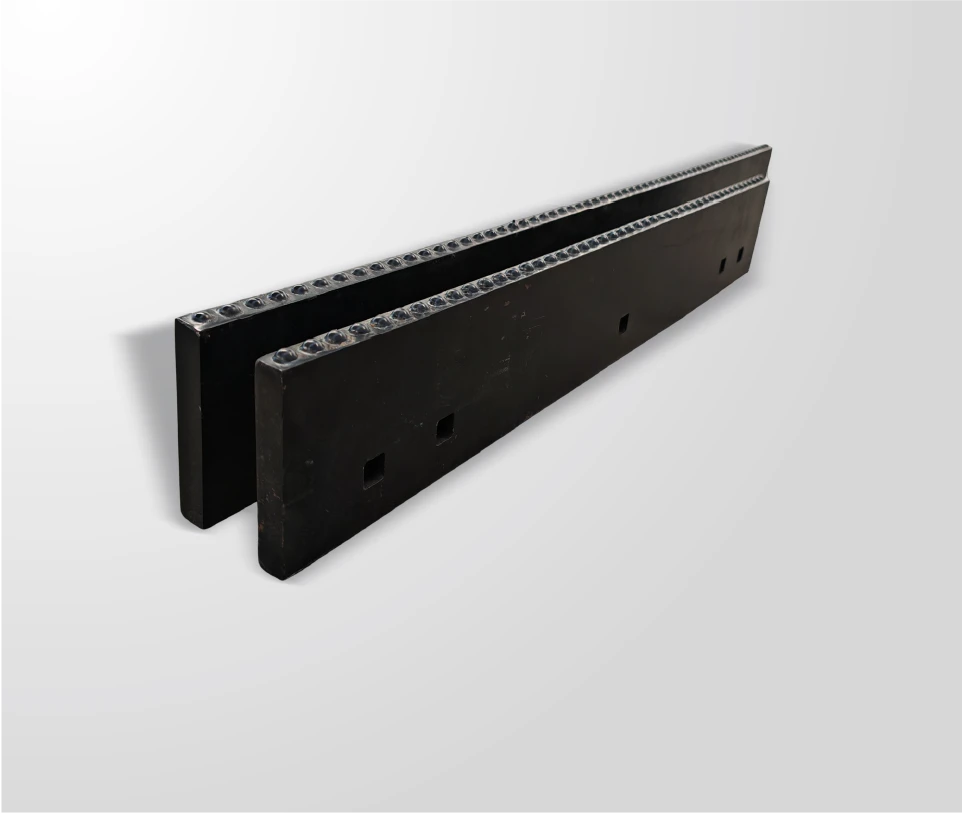
Packed Ice Carbide Kit for Hardpack and Ice
An aggressive insert layout for the routes where a normal edge skates across the top and leaves the ice behind.
- EdgeAggressive kit
- BestPacked ice & hardpack
- LifeExtended
Built around the way fleets actually buy edges
Everything under one roof
Powder metallurgy, pressing, sintering, welding and vulcanisation run in the same Rayong plant, so nobody subcontracts the part that decides wear life.
100% non-China tungsten
Raw material is sourced outside China and processed in Thailand — a supply chain that keeps tariff exposure and lead-time surprises off your desk.
Traceable from powder to packing
Every stage is inspected and archived. Each carton carries a batch reference, so a field failure can be traced back to the exact sintering run.
Engineering, not order taking
Send a drawing, a worn blade or a machine model. Our engineers return an edge profile, carbide grade and packing spec that fit the surface you clear.
Container-ready logistics
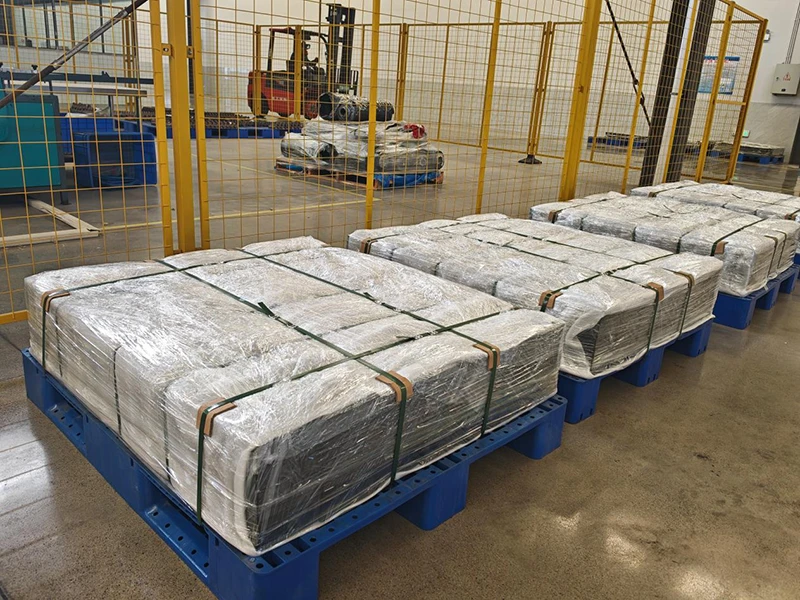
Export packing, pallet dimensions and documentation are prepared against your receiving requirements, with a production schedule confirmed before the order starts.
Proven in North American winters
More than a decade of exporting into the US and Canadian snow belt, with tens of millions of dollars of field-tested blades behind the design work.
Where a carbide edge pays for itself
The deciding number is never the purchase price of one blade. It is how many times a crew stops the truck, and what that stop costs.
| Decision factor | Carbide edge | Standard steel edge |
|---|---|---|
| Service life | 10–20× longer on abrasive road surfaces | Wears through within a few storms |
| Edge retention | Holds the scraping edge all season | Requires repeated re-edging or flipping |
| Changeouts | One planned swap instead of several | Frequent mid-storm downtime |
| Labour exposure | Fewer crew hours, less risk of injury | Heavy manual handling every change |
| Total cost of ownership | Higher purchase, lower cost per lane kilometre | Lower purchase, higher running cost |
The SENTHAI blade programme explained
Why a carbide edge changes the winter budget
A steel edge is cheap to buy and expensive to run. Every time a crew stops to flip or replace a worn cutting edge, the loader is idle, the operator is off the route and the storm keeps falling. Tungsten carbide is expensive per kilogram and cheap per lane kilometre, because it keeps the scraping angle you specified for a whole season instead of a few shifts.
SENTHAI exists to make that trade work reliably. We manufacture the carbide ourselves — powder, press, sinter, braze and weld — so the grade and geometry that performed in your sample is the same grade and geometry in the container you receive eight months later.
| What it changes | Carbide edge | Conventional steel edge |
|---|---|---|
| Blade life on abrasive roads | 10–20× longer between changes | Wears out within a few storms |
| Keeping the scraping angle | Edge stays sharp all season | Rounds off and starts skipping |
| Truck downtime | One planned change per season | Repeated unscheduled stops |
| Crew risk | Fewer manual handling events | Heavy blades handled again and again |
| Cost per lane kilometre | Lower once labour is counted | Looks cheaper on the invoice only |
How a SENTHAI blade is made
Everything from the powder blend to the final vulcanised rubber layer happens on one site in Rayong. Nothing critical is subcontracted, which is what makes batch traceability real rather than a claim on a certificate.
- Material preparation. Tungsten carbide powder is blended and wet-ground to the properties the application needs — tougher for gravel and potholes, harder for packed ice.
- Pressing and sintering. Inserts are formed on automated presses up to 500 tonnes and sintered under vacuum or low pressure so density is uniform from end to end.
- Joining. Inserts are brazed and induction-welded into the steel carrier, then annealed to keep the tool tough rather than brittle.
- Finishing and packing. Edges are deburred, inspected against the approved drawing and packed with batch references that survive the trip.
Four edge systems, one supply chain
Fleets rarely need only one edge. We keep the four systems that cover almost every winter scenario, and because they come from the same plant, mixing them in one container does not mean juggling four suppliers.
- Carbide snow plow blade — the workhorse edge for highway and municipal trucks running asphalt and chip seal.
- JOMA style blade — a rubber-flex edge with carbide wear segments, quiet on the road and gentle on decorative surfaces.
- Carbide inserts — replaceable inserts and edge strips for tenders that call out a specific insert geometry.
- Packed ice carbide kit — aggressive insert layout for hardpack, ice and compacted snow that a standard edge skates over.
Where our edges are working
- State, county and municipal highway fleets in the US snow belt and Canada.
- Commercial snow removal contractors running trucks, loaders and skid steers.
- Airport aprons and industrial yards where surface damage is not acceptable.
- Gravel and unpaved roads, where impact toughness matters more than pure hardness.
- Dealer and distributor programmes that need a private-label edge with a stable specification.
Raw material, tariffs and lead time
SENTHAI is a US-invested company, and all tungsten raw material is sourced outside China before it is processed in Thailand. That combination keeps the supply chain stable when trade rules move, and it means the country of origin on the documents matches the country on the blade.
Standard profiles typically move through production in weeks rather than months, and every order gets a confirmed schedule before pressing starts. Tooling for a new profile is quoted with the blade, so you can see the real cost of a custom length up front.
Work with the engineers, not a call centre
Send a machine model, an existing part number or a photo of the worn edge. We will come back with an edge profile, a carbide grade and a packing plan — and we will tell you when a cheaper edge is genuinely the better answer.
Frequently asked questions
How much longer does a carbide edge last than a steel edge?
On abrasive winter roads, carbide cutting edges typically last ten to twenty times longer than a standard steel edge. The exact multiple depends on the surface, the down-pressure on the blade and how the operator works the plow, so we quote a range rather than a single number.
Can you match an existing blade rather than design a new one?
Yes. Send a drawing, a sample blade or a photo with measurements and we will reproduce the length, thickness, bolt pattern and edge angle. Where a pattern is not published we reverse-engineer it from the sample you post to us.
What is the minimum order for a first trial?
Trial quantities depend on the blade type and profile. Many customers start with a small field-test batch before a season order, and we will confirm the smallest sensible quantity for your specification.
Where are the blades manufactured?
Everything is produced at our Rayong facility in Thailand, from powder metallurgy and sintering through to welding, vulcanisation and export packing.
Do you supply private-label and OEM blades?
Yes. We produce to your drawing or to a joint specification, pack under your label and hold the specification on file so repeat orders do not drift.
How quickly can we get a quotation?
Share the machine, the surface you clear and an approximate quantity and you will normally have a quotation within one working day. A drawing or photograph shortens it further.
From drawing to a shipped edge
Specification review
Send the machine model, current part number or a drawing. We confirm length, thickness, bolt pattern and edge profile before anything is quoted.
Grade and sample
We match the carbide grade and insert geometry to your surface — packed ice, gravel or bare asphalt — then cut a sample for field testing.
Production and inspection
Pressing, sintering, welding and vulcanisation run to the approved drawing, with inspection at each stage and records archived by batch.
Packing and repeat orders
Blades ship in export packing sized to your container plan. Because the specification is archived, repeat orders restart from the same drawing.
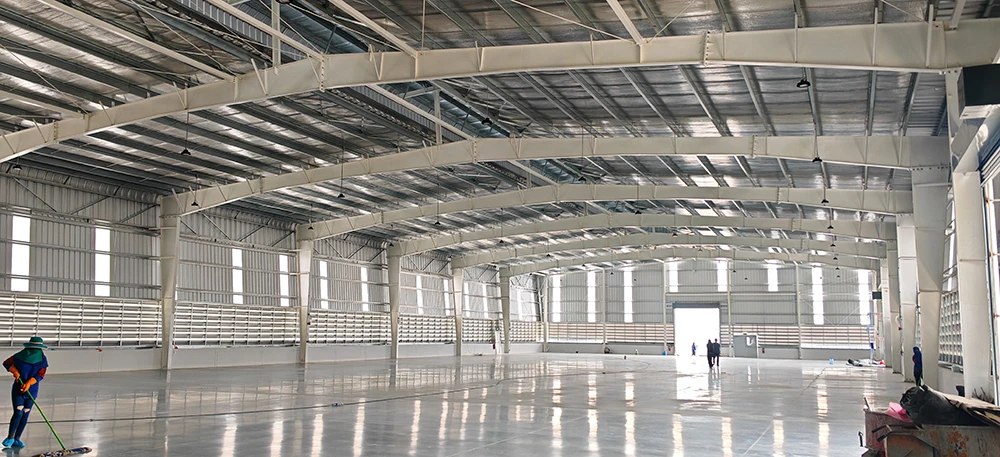
A plant you can audit before you place the order
SENTHAI is a US-invested manufacturer based in Rayong, Thailand. The production route is deliberately short: mixing and wet grinding, robotic pressing, vacuum sintering, induction welding and vulcanisation all happen on one site.
- Wet grinding, pressing, sintering, welding and vulcanisation in-house
- ISO 9001 and ISO 14001 certified processes
- More than ten production patents on the line
- Factory visits and live video reviews on request
Technical notes from the carbide line
Specification help, wear data and procurement notes written by the team that makes the blades.
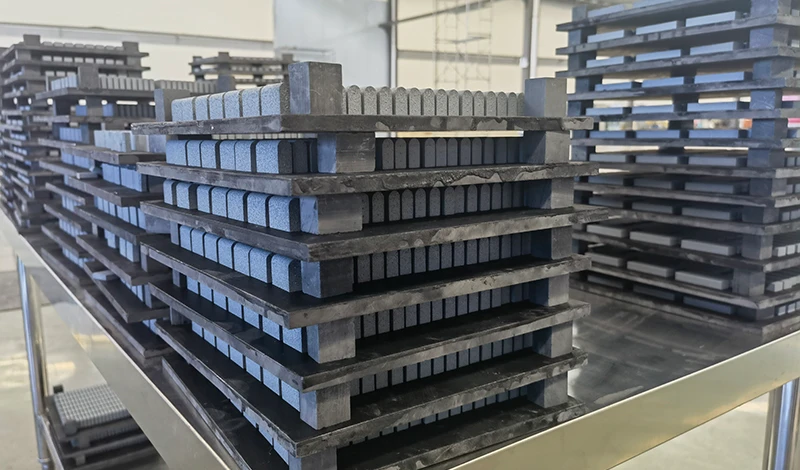 Carbide Insert Retention in Flex Blades: Brazing vs Mechanical Fixing
Carbide insert retention in flex blades: brazed versus mechanical fixing, load cases, failure signatures and the inspection options for each method.
Read the guide
Carbide Insert Retention in Flex Blades: Brazing vs Mechanical Fixing
Carbide insert retention in flex blades: brazed versus mechanical fixing, load cases, failure signatures and the inspection options for each method.
Read the guide
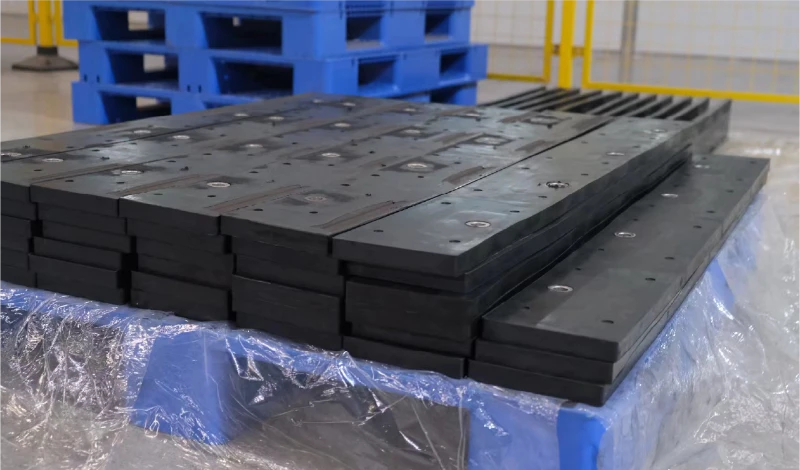 JOMA Blade Cost per Season: Comparing Against Two Steel Change-Outs
JOMA blade cost per season versus two steel change-outs: the model for parts, workshop hours, downtime and route length, and where the…
Read the guide
JOMA Blade Cost per Season: Comparing Against Two Steel Change-Outs
JOMA blade cost per season versus two steel change-outs: the model for parts, workshop hours, downtime and route length, and where the…
Read the guide
 Rubber Flex Blade Repair and Re-Segmentation: A Fleet Workshop Decision Guide
Rubber flex blade repair and re-segmentation: which damage can be fixed, which ends a blade's life, repair versus replacement cost and the…
Read the guide
Rubber Flex Blade Repair and Re-Segmentation: A Fleet Workshop Decision Guide
Rubber flex blade repair and re-segmentation: which damage can be fixed, which ends a blade's life, repair versus replacement cost and the…
Read the guide
Questions buyers ask before the first order
How much longer does a carbide edge last than a steel edge?
On abrasive winter roads, carbide cutting edges typically last ten to twenty times longer than a standard steel edge. The exact multiple depends on the surface, the down-pressure on the blade and how the operator works the plow, so we quote a range rather than a single number.
Can you match an existing blade rather than design a new one?
Yes. Send a drawing, a sample blade or a photo with measurements and we will reproduce the length, thickness, bolt pattern and edge angle. Where a pattern is not published we reverse-engineer it from the sample you post to us.
What is the minimum order for a first trial?
Trial quantities depend on the blade type and profile. Many customers start with a small field-test batch before a season order, and we will confirm the smallest sensible quantity for your specification.
Where are the blades manufactured?
Everything is produced at our Rayong facility in Thailand, from powder metallurgy and sintering through to welding, vulcanisation and export packing.
Do you supply private-label and OEM blades?
Yes. We produce to your drawing or to a joint specification, pack under your label and hold the specification on file so repeat orders do not drift.
How quickly can we get a quotation?
Share the machine, the surface you clear and an approximate quantity and you will normally have a quotation within one working day. A drawing or photograph shortens it further.