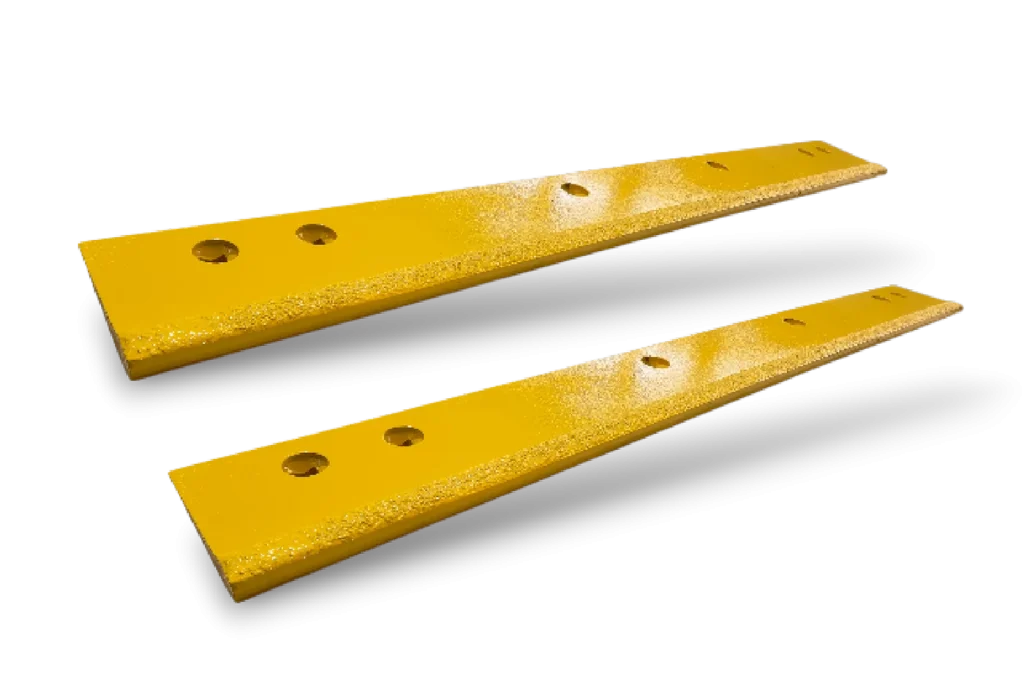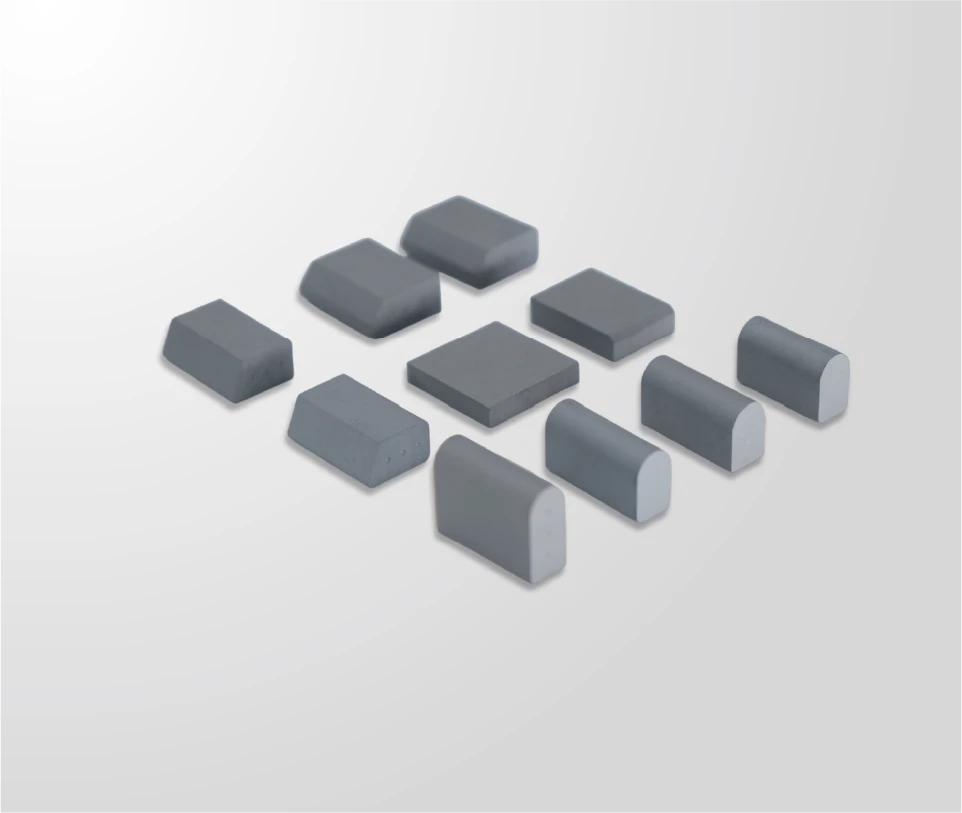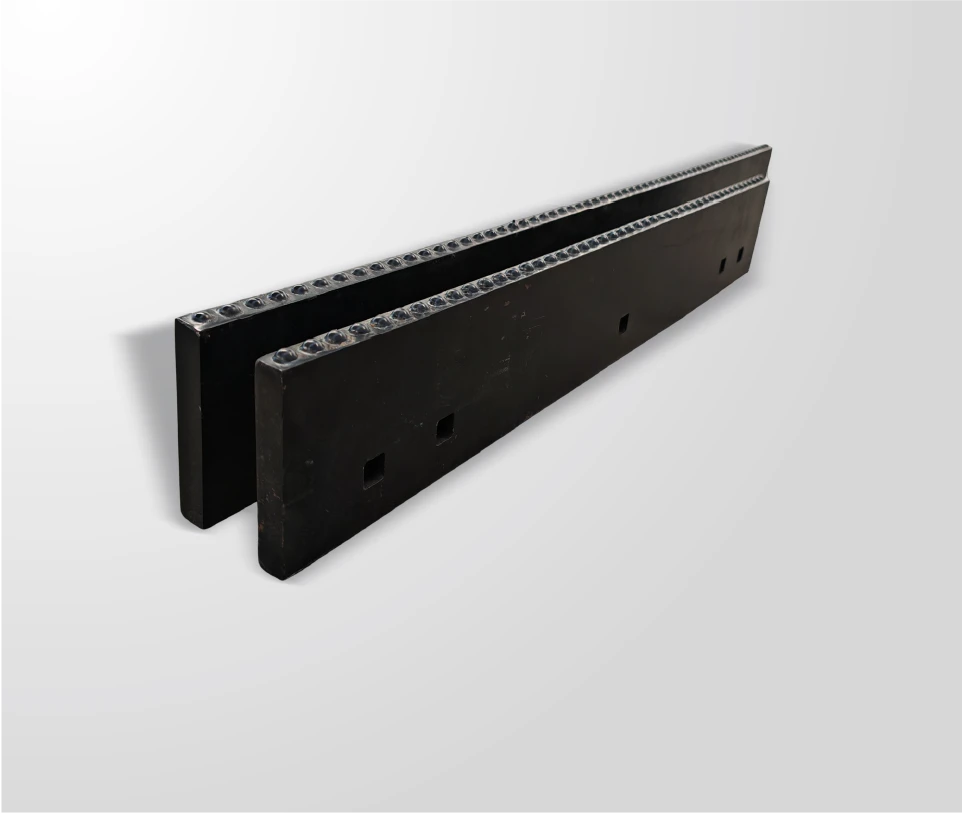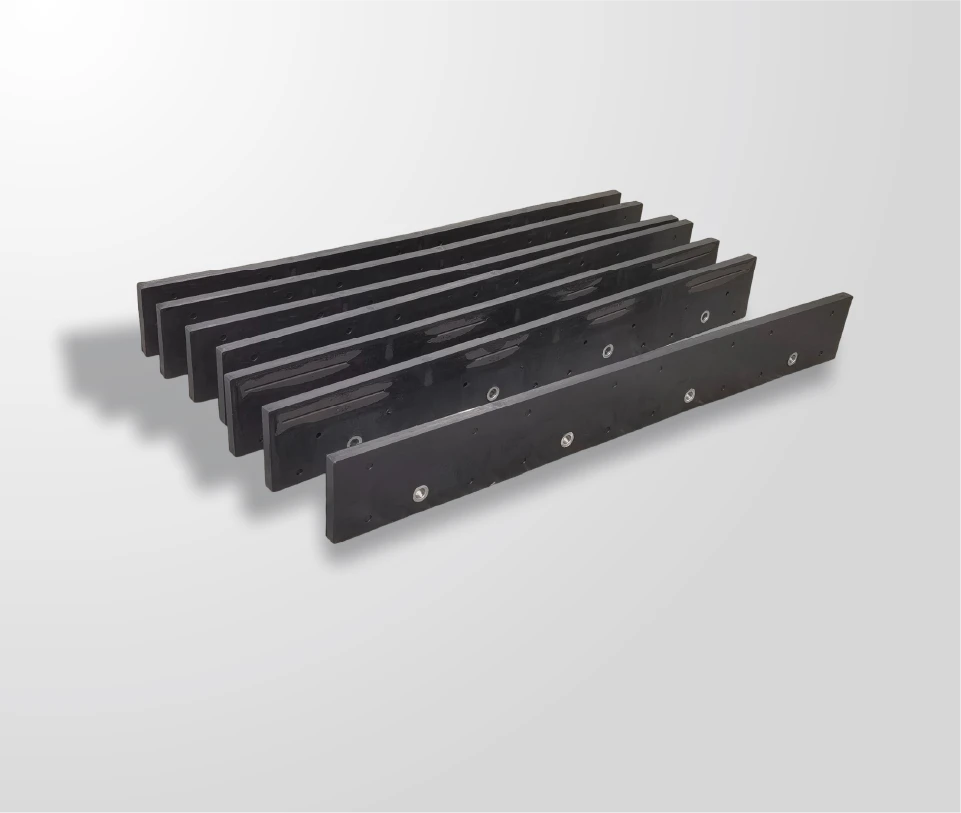
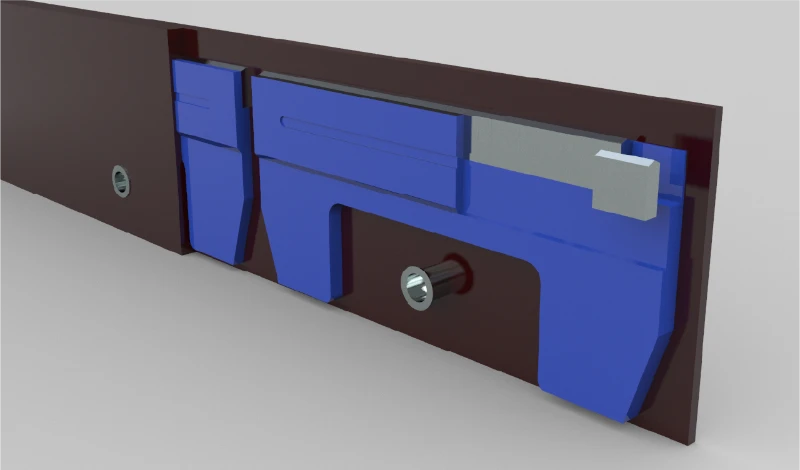
A JOMA style blade pairs a flexible rubber body with hard carbide wear segments. The rubber lets the edge follow the surface and absorb impact instead of transmitting it into the machine, while the carbide does the scraping where it matters.
That combination is why this family is common in commercial snow removal and on decorative surfaces. It clears the way a steel edge does, without the noise, the chatter or the scraped-up paving that a rigid edge leaves behind.
- Edge constructionVulcanised rubber body with tungsten carbide wear segments
- Segment layoutTiled segments, spacing matched to the application
- Typical lengths3 ft, 4 ft and 5 ft segments; full-length blades to drawing
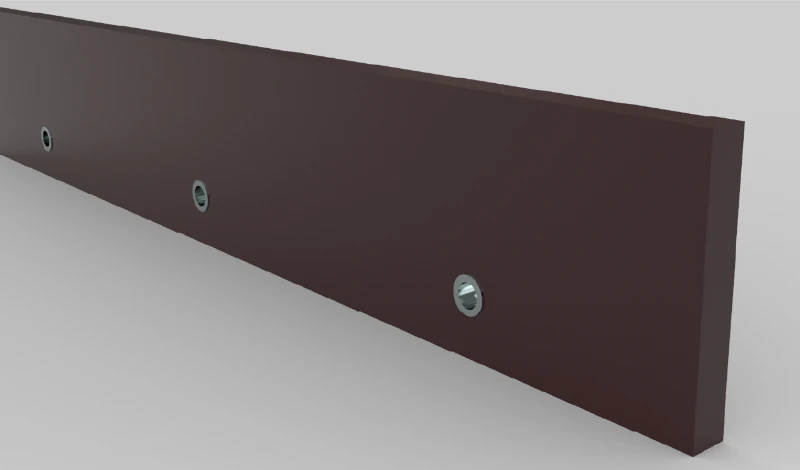
- FixingsSteel carrier with bolt holes to your existing pattern
- Surface suitabilityCommercial lots, decorative paving, pavers, mixed urban routes
- Operating temperatureRubber compound selected for low-temperature flexibility
Why rubber-flex instead of a rigid edge
| Consideration | JOMA style rubber-flex | Rigid steel or carbide edge |
|---|---|---|
| Surface damage | Very low — the edge yields over high points | Marks and scores decorative paving |
| Noise | Noticeably quieter | Loud, especially on textured surfaces |
| Impact absorption | Rubber damps shock before it reaches the machine | Shock passes into the plow and truck |
| Wear resistance | Carbide segments carry the abrasion | Depends entirely on the parent material |
| Best environment | Lots, driveways, pavers, tight urban work | Open highway and abrasive rural routes |
Where a JOMA style blade earns its place
- Shopping centres, car parks and drive-through lanes where surface appearance matters.
- Municipal downtown routes with decorative paving, brickwork or stamped concrete.
- Airport aprons and terminal frontage where noise and surface damage are both concerns.
- Contractors running mixed routes who want one edge that will not tear up a client’s paving.
- Operators working with lighter machines where impact shock is a real maintenance cost.
How we build it
- Steel carrier. The carrier is cut and drilled to your bolt pattern so the blade mounts without adapters.
- Carbide segments. Inserts are formed and sintered on the same line as our standard edges, then positioned to the agreed spacing.
- Vulcanisation. The rubber layer is bonded under controlled temperature so it stays flexible in the cold instead of going brittle.
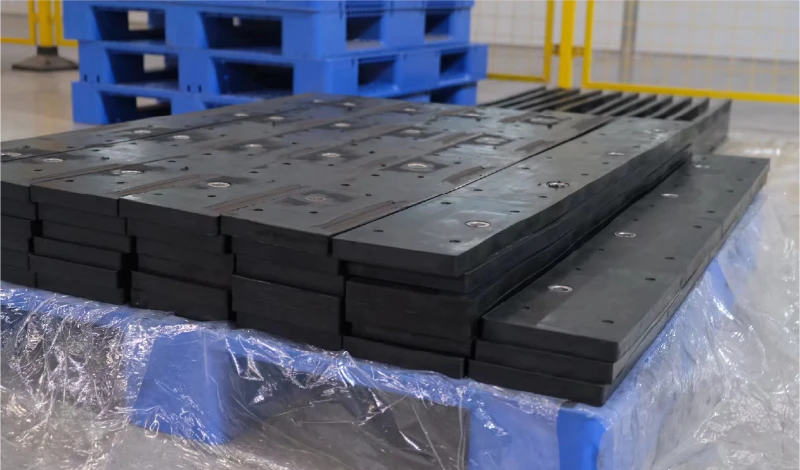
- Inspection and packing. Segment retention and rubber bond are checked, then the blade is packed to arrive straight and undamaged.
Rubber compounds are not equal. Tell us the lowest temperature you work in and we will match the compound — a summer-formulated rubber stiffens and stops conforming exactly when you need it to.
Specifying your blade
Send the machine model, the current blade length and the bolt pattern — or simply post us a worn blade and we will reverse-engineer it. We will confirm the segment spacing, the rubber compound and the packing before anything is pressed.
What is the practical difference between JOMA style and standard carbide blades?
The parent body. A JOMA style blade uses a flexible rubber body that conforms to the surface, while a standard carbide blade uses a rigid steel carrier for maximum scraping force. The carbide wear segments are the same technology.
Can the segments be replaced?
Segment replacement is possible on some designs but is usually uneconomic compared with replacing the blade. If a replaceable-insert approach suits your fleet better, our carbide insert range is designed for exactly that.
Do you supply the rubber layer separately?
The vulcanised rubber layer is bonded to the carrier as part of production. It is not supplied as a standalone service.
Which segment lengths are available?
Three, four and five foot segment formats are standard, and full-length blades are produced to drawing. Tell us the machine and we will confirm what fits.