Hardware is the least glamorous part of winter maintenance and the cause of a surprising share of damage. A bolt that is slightly loose lets the blade move, and movement abrades the moldboard behind it until the mounting holes themselves are worn oval.
Why edge hardware comes loose
- Vibration from the road surface, which is constant and worst on chip seal and gravel.
- Reusing worn fasteners, particularly nyloc nuts and spring washers that have already been cycled.
- Torquing onto a painted or contaminated surface, where the coating compresses after the fact and the preload disappears.
- Recessed hardware packed with debris, which stops the bolt seating properly.
Setting torque properly
- Clean the mounting faces and the bolt holes; a wire brush is usually enough.
- Fit new fasteners where the specification calls for them rather than reusing cycled hardware.
- Tighten in a sequence from the centre outwards so the blade beds down evenly instead of bowing.
- Re-check torque after the first few hours of service, then again at the intervals your maintenance schedule sets.
A blade torqued correctly in the workshop and never re-checked will usually be loose within a week of abrasive work. The re-check takes minutes and prevents the expensive failure.
Wear plates and moldboard protection
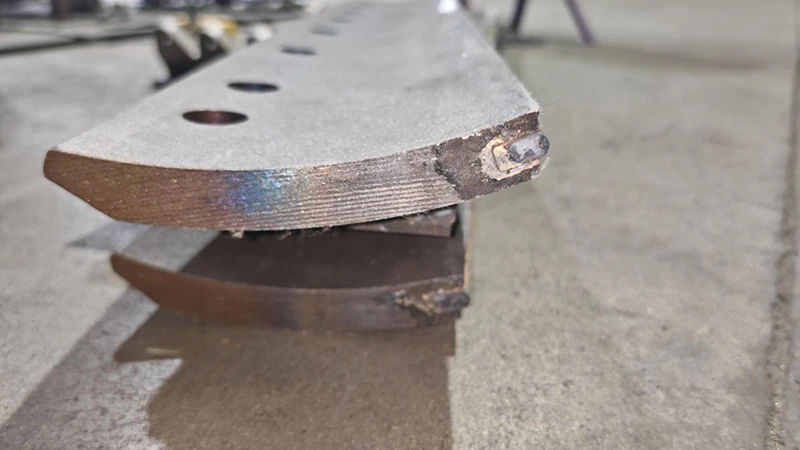
Behind a carbide edge, the moldboard takes the abrasion that the edge has already deflected. On high-mileage routes that shows up as a worn lip and elongated bolt holes, which eventually prevents a new edge from seating properly at all.
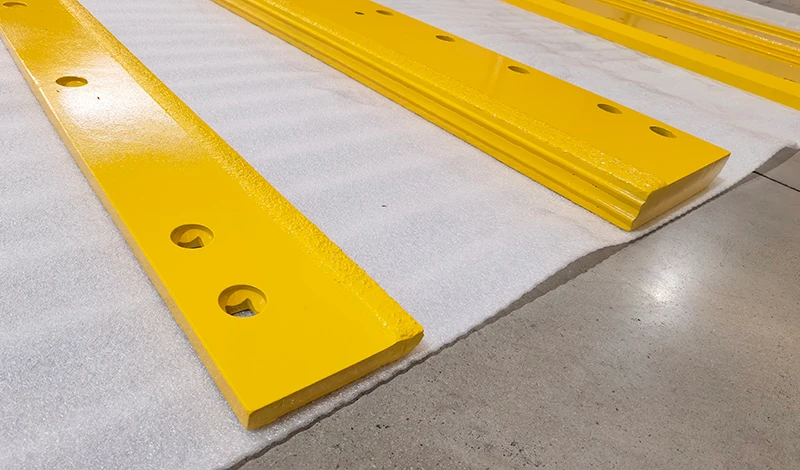
Wear plates are cheap insurance. They are fitted behind or beneath the cutting edge, take the abrasion that would otherwise reach the moldboard, and are replaced without touching the structure of the plow.
| What you see | What it means | Action |
|---|---|---|
| Shiny wear ring around a bolt head | The bolt has been moving | Re-torque or replace the fastener |
| Elongated bolt holes in the moldboard | Long-term movement and abrasion | Wear plates and, where needed, hole repair |
| Blade mounted with a visible gap | Uneven seating after tightening | Loosen, clean, and re-tighten from the centre outwards |
| Frequent loss of the same bolt | Thread or hole damage at that position | Inspect the hole and use a repair insert if required |
How often should edge hardware be checked?
After the first few hours of service and then at the intervals in your maintenance schedule. On abrasive routes, more often than feels necessary.
Can I reuse bolts when changing an edge?
Only if they are undamaged and the specification allows it. Locking fasteners that have already been cycled lose holding force and should be replaced.
Do wear plates affect blade performance?
They protect the moldboard without changing how the cutting edge meets the surface, provided they are fitted to the correct thickness for the mounting.