Ten to twenty times the wear life of a standard steel edge: that is the range the manufacturer publishes for tungsten carbide edges on abrasive winter roads, and it is usually the number that starts the conversation. The number is not the specification. A highway fleet that buys carbide on the strength of a wear-life claim, without matching the grade to the surface, the insert spacing to the abrasion and the bolt pattern to the machine, finishes the season with the changeout schedule it had before. This guide follows the decisions in the order a fleet engineer has to make them, from the surface mix on the route to the documents that have to arrive with the pallet.
What a carbide edge changes on a highway route
Specify grade, geometry and fitment, not the wear-life claim.
A carbide edge that lasts a season is matched to the surface mix, the insert spacing and the machine’s bolt pattern; the grade decides whether the edge wears out or chips out.
Carbide snow plow blades are a steel carrier with tungsten carbide inserts joined to the working face. The steel gives the edge the stiffness to carry a full plow load; the carbide gives it abrasion resistance at the point where road and blade meet. Because the carbide holds its shape, the scraping angle set at the start of the season is still the scraping angle in February, and that is what removes unplanned changeouts from the schedule.
The trade-off is brittleness. A grade hard enough to resist chip seal can chip when it meets a raised manhole or a frozen berm, which is why the carrier is annealed after welding and why hardware sits recessed below the wear plane. Every specification decision below is a way of choosing which failure mode you would rather manage: slow wear or sudden chipping.
Blade position, road class and plowing speed
The position on the truck and the class of road set the load the edge has to survive, so they belong in the specification rather than in a conversation after delivery. A front blade on a highway unit runs at speed against chip seal and carries impact energy from whatever the road surface has lost; an underbody edge works at lower speed but with far more down-pressure on hardpack, where the failure risk shifts from impact to heat, chipping and uneven wear across the length.
Road class also changes the abrasion rate. Federal guidance on how weather and winter operations affect the road network is a useful starting point for writing the route description into a specification (FHWA road weather impacts). State fleet practice shows the same logic in operational documents: route classifications drive equipment assignment and changeout planning, as in the maintenance programmes summarised by MnDOT Maintenance.
Name the position and the route class in the specification, and the grade discussion becomes specific instead of theoretical. A fleet that runs one edge part number across a downtown district and an interstate shoulder is not standardising; it is averaging two different jobs.
Carbide grade and insert geometry selection
Grade selection is a match between the surface and the failure mode you are willing to accept, and the published selection logic from the manufacturer is a reasonable starting table for a specification conversation. There is no single grade that is both maximally wear-resistant and maximally impact-resistant; the choice moves the risk from one failure mode to the other.
| Route condition | Grade intent | Why it works |
|---|---|---|
| Clean asphalt and concrete | Abrasion-led | Maximum hardness where impact risk is low |
| Chip seal and surface dressing | Abrasion-led, closer insert spacing | Highly abrasive aggregate wears the edge fastest |
| Mixed paved and gravel | Impact-led | Tougher carbide absorbs stone impact without chipping |
| Packed ice and hardpack | Aggressive insert layout | Geometry has to bite before the grade matters |
| Unknown or variable | Trial sample first | One season of field data settles the question |
Insert spacing is part of the same decision. Closer spacing puts more carbide per metre of edge, which helps on abrasive aggregate but raises the cost of the blade. Hardness itself is a measurable property rather than a marketing word; the standard hardness and abrasion test methods published by ASTM International are the reference for the figures a supplier should be able to quote, and tungsten supply and grade fundamentals are summarised in the annual mineral commodity reporting from the US Geological Survey.
Edge thickness, length and bolt pattern
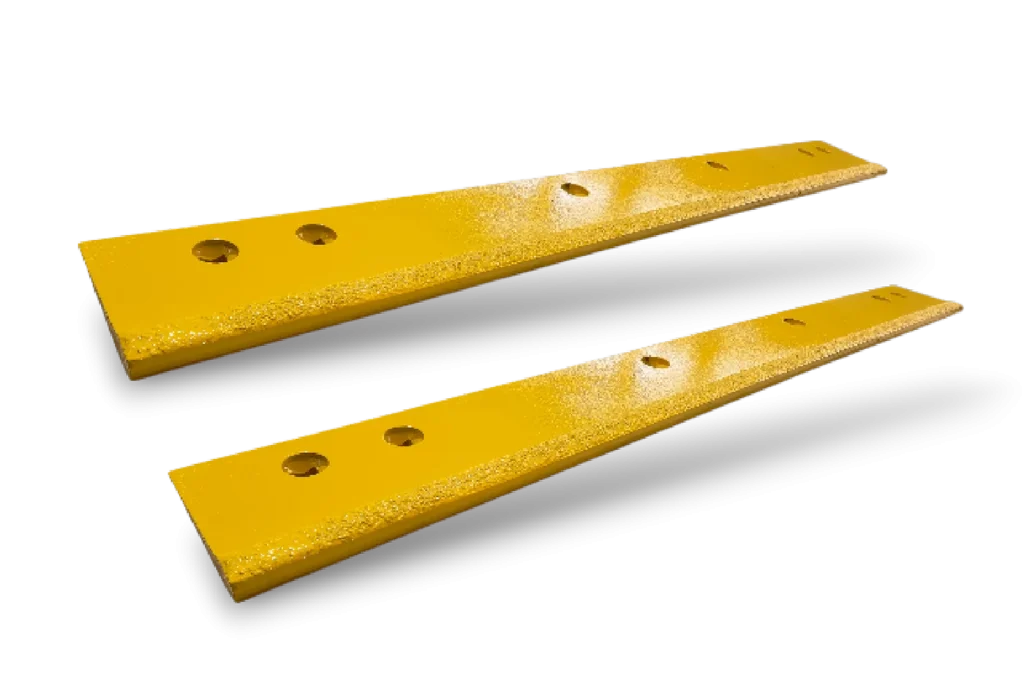
Fitment is where a technically correct edge becomes a usable one. The bolt pattern, hole diameter and edge angle have to match the machine, because a blade that does not line up is either redrilled in the yard or returned, and both outcomes cost a week. Ask for the pattern to be confirmed against a drawing, a part number or a photograph of the mounting with measurements before production.
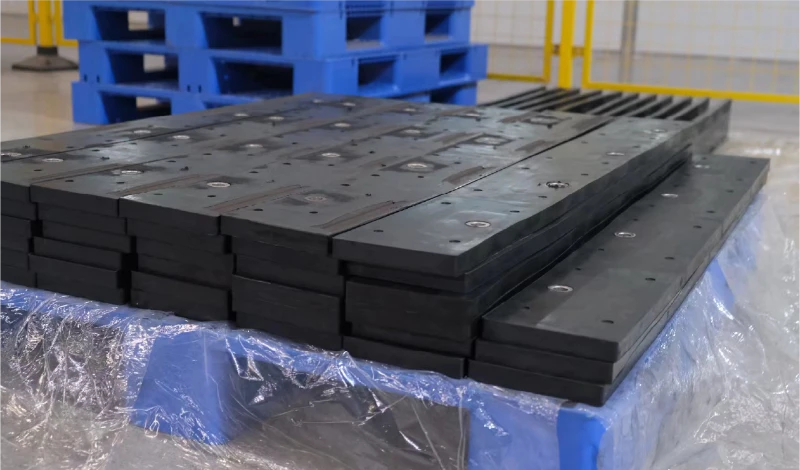
Length and thickness follow the same rule of fit to the machine rather than to a catalogue. Heavy-duty carriers take thicker edge sections, and long moldboards are commonly covered in segments so a damaged section can be replaced without scrapping the whole edge. Where a specification references a standard bolt pattern, cite the standard explicitly: the published standards work of AASHTO is the usual reference point for North American highway practice, and European programmes often work to DIN patterns instead.
Recessed hardware is worth specifying in writing. Bolt heads that sit below the wear plane are not shaved off by the road surface, which keeps the edge attached through the season instead of loosening one section at a time.
Wear parts that must be specified together
An edge is not a single consumable. It is one part of an assembly in which shoes, wear plates, bolts and guards all wear at their own rate, and a purchase order that names only the blade pushes every one of those decisions into the season.
Specify the assembly, not just the cut edge: the edge itself, the bolts with grade and thread, any wear plate or cover that protects the carrier, and the shoes or skids that set the blade height. Where a fleet plans to service edges rather than replace them, the specification should say so, because replaceable insert and strip designs exist for exactly that pattern and they change the spare-parts list. The published range from SENTHAI shows the split: complete edges for fleets that replace, and loose or pre-welded inserts for fleets that service the edge in a workshop. Deciding this at specification stage is what keeps the spare-parts shelf from filling with parts that fit nothing.
Specification sheet for a public tender
A tender specification should be complete enough that two suppliers quoting against it are quoting the same product. If the document names a length and a price, the grade, the documentation and the packing become whatever each bidder decides they can get away with.
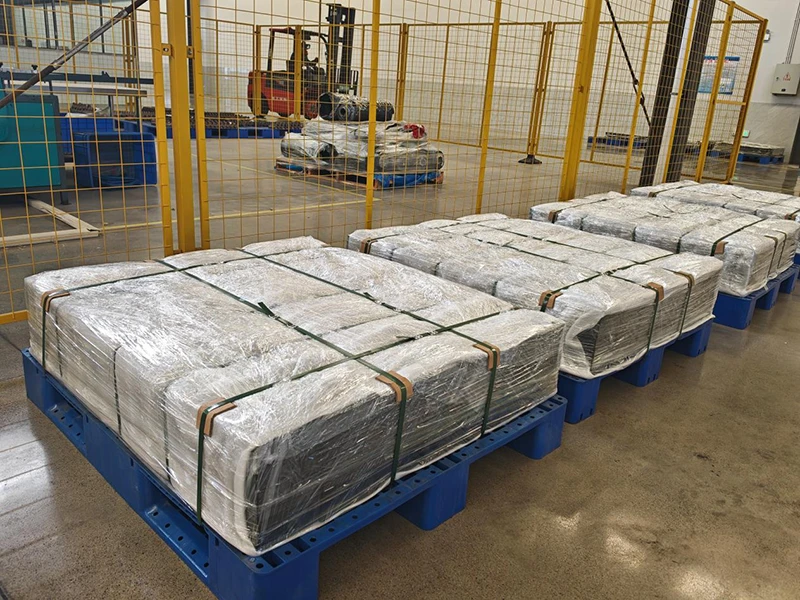
Write these fields into the document: machine and mounting position; route surface mix and class; edge length, thickness and segment arrangement; bolt pattern with hole diameter and spacing; carbide grade intent with the acceptance test or field-trial route; insert spacing or density; hardware specification; documents required per batch; inspection and witness-test requirements; packing and labelling standard; and the schedule, including whether a first-article approval is required.
Public procurement practice in transport research and state programmes is a useful model for how much of this belongs in writing (Transportation Research Board). Where an edge is imported, origin and classification statements have to be handled as well, and the entry-level framing published by US Customs and Border Protection is the reference for what a receiving department should expect to see.
Cost per lane kilometre sanity check
Cost per blade is the wrong unit for a fleet decision, because it ignores the only costs that scale with winter: labour, downtime and the spare inventory that has to sit on the shelf to cover both. The workable comparison is cost per lane kilometre, or cost per lane mile if that is how the fleet reports its work.
The calculation is a division with four inputs: the delivered cost of the edge including freight and duty; the labour and equipment time for one changeout; the number of changeouts the edge survives on that route; and the lane kilometres cleared between changeouts. Divisibility matters more than precision. If two edges are being compared, the fleet needs the same route, the same truck and the same operator, otherwise the comparison measures the route instead of the blade.
Treat any supplier’s wear-life multiple as an indicative range, not a fixed outcome. SENTHAI publishes a range rather than a single figure for exactly that reason, and states that the multiple depends on surface, load and how the route is worked. Where the answer is genuinely unclear, a trial batch on one route is cheaper than converting a whole fleet to a grade that turns out to be wrong.
Common specification errors that trigger premature failure
Most early failures trace back to a decision made before production, not to a defect in the blade. The manufacturer’s own control plan works backwards from the failure modes a fleet sees, and the same list is a useful audit of a specification document.
- Choosing grade by price rather than by surface, which produces chipping on gravel routes and fast wear on chip seal.
- Specifying a bolt pattern from a “similar” truck instead of measuring the mounting or quoting the standard.
- Leaving acceptance criteria out of the document, so both sides inspect against different expectations.
- Buying the edge without the hardware, shoes or wear plates, then discovering the gaps mid-season.
- Not requiring a batch reference on the carton, which removes the ability to trace a field problem back to a production run.
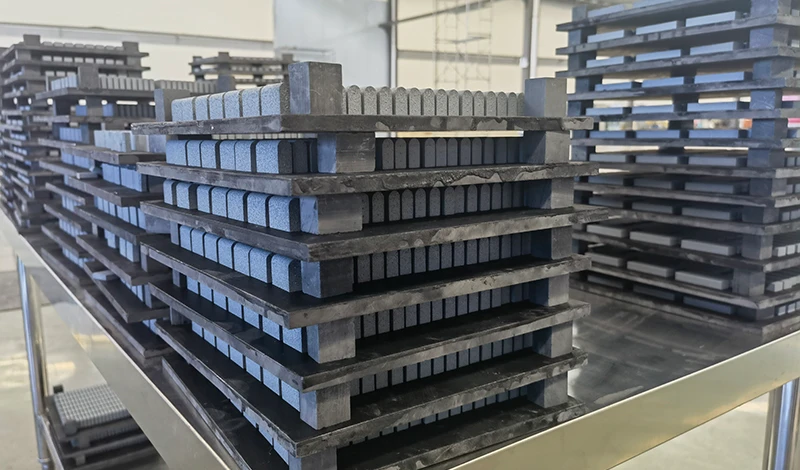
The controls that answer those errors sit in production rather than in the quotation: incoming material certificates with retained samples, in-process inspection at forming, sintering, brazing and welding, proportional final inspection for hardness, insert retention, straightness and bolt-hole alignment, and a pre-packing review against the order. SENTHAI publishes the four gates and the traceability rule on its quality control page, and the production route they sit on is described in the factory tour.

FAQ
What is a carbide blade good for on a plow truck?
Carbide is there for the abrasion. A steel edge wears along its whole length as the road grinds it down, while a tungsten carbide edge keeps its shape for far longer, so the scraping angle set in November is still the scraping angle in February. It suits asphalt, chip seal and hardpack where abrasion, not impact, is the main wear driver.
How do you specify carbide snow plow blades in a municipal tender?
Write the machine and mounting position, the surface mix on the route, the edge length and thickness, the bolt pattern with hole diameter, the carbide grade intent (abrasion-led or impact-led), the insert spacing, and the documents required with each batch. Add the acceptance criteria and the packing standard. A tender that names only a length and a price leaves the grade and the documentation to whoever bids lowest.
Are carbide edges worth the extra cost over steel?
Compare cost per lane kilometre rather than cost per blade. A carbide edge costs more at the invoice but is changed less often, and the changeout itself carries labour, a spare blade and downtime the fleet absorbs. On abrasive routes the arithmetic usually favours carbide; on light residential work with little abrasion, a steel or rubber-flex edge can still be the honest answer.
What documentation should come with a carbide edge?
Ask for the material certificate, the dimensional record against the approved drawing, and a batch reference that links the carton back to the production run. For contract supply, agree a certificate of conformity and any witness-test requirement at quotation stage rather than after delivery. Keep the packing list with the batch labels so a field question can be answered from documents instead of from memory.
Send the machine, the surface mix on the route and the quantity you plan to run, and the SENTHAI engineering desk will confirm the edge profile, carbide grade, bolt pattern and packing before anything is quoted.