Rubber, poly, steel and carbide edges differ on one trade: how hard the edge scrapes against how much impact it survives. Rubber and poly protect decorative surfaces, steel absorbs impact cheaply, carbide holds an abrasive edge far longer. Choose by pavement and season hours, not by hardness alone.
Most catalogue pages quietly assume one material is the answer. Fleet buyers already know the uncomfortable counterpoint: the right cutting edge is a matrix of surface, noise rules, ice nights, and bay labour, not a single hero SKU.
Snow plow cutting edges are commonly carbide, steel, rubber (including rubber-flex), or poly/UHMW. Carbide resists abrasive asphalt; steel is cheap to buy and expensive to change; rubber protects decorative pavement; poly quiets lots but struggles on packed ice. Choose by surface and downtime cost, then lock bolt pattern and thickness on the purchase order.
| Material | Best surface | Life on abrasive pavement | Impact tolerance | Typical failure | Cost position |
|---|---|---|---|---|---|
| Rubber / rubber-flex | Pavers, decorative paving, quiet lots | Lowest | Highest — flexes instead of chipping | Chunking and tearing at the fixings | Mid |
| Poly / UHMW | Lots, driveways, noise-restricted zones | Low to mid | Mid — cracks in deep cold | Cracking and edge curl | Low to mid |
| Steel | Gravel, shoulders, mixed routes | Low on asphalt, adequate on gravel | High — bends rather than breaks | Wear-through, then bending | Low |
| Carbide | Chip seal, aged asphalt, packed ice | Highest | Low — chips on impact | Chipped or lost inserts | High |
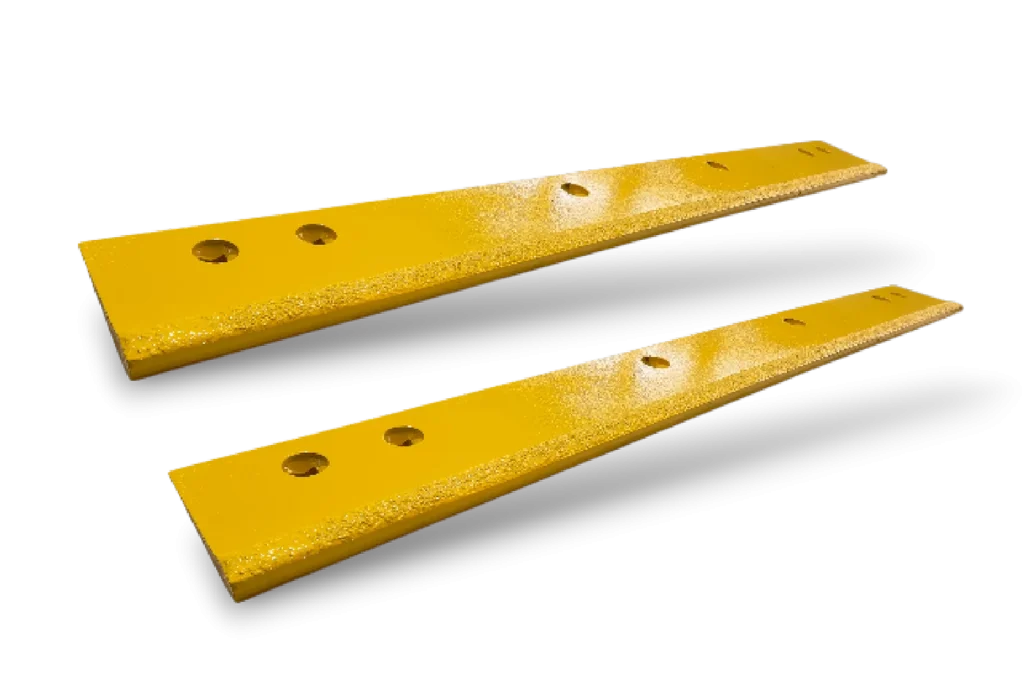
Decision tree by surface and downtime cost
- Decorative or coated lots → rubber or rubber-flex first.
- Quiet night retail → poly/UHMW, with a carbide spare plan for ice.
- Highway asphalt / chip seal with frequent steel changeouts → carbide carrier.
- Soft gravel / short season → steel or sacrificial rubber may still win on total cost.
- Mixed depot → stock two families; do not force one edge onto every plow class.
If your depot has never mapped routes to materials, start with the snow plow blade selection guide, then return here for the comparison maths and omission list that product SERPs usually skip.
Season timing still drives spare depth. When regional winter criteria ramp up, the wrong material sitting in the rack becomes overtime; track criteria with NWS products rather than calendar folklore.
Carbide edge strengths and failure modes
Strengths: abrasion resistance on grit, fewer changeouts through a storm week, and better truck availability when labour is the scarce resource. Failure modes: chipped inserts from impact, wrong attack angle, soft-shoulder digging, and dry scrape that overheats the edge. Carbide is still a wear system, see carbide snow plow blades for carrier families.
Independent agency evaluations of blade systems appear from time to time in state DOT literature; treat them as directional evidence and re-measure on your own surfaces. A starting point for browsing DOT technical libraries is North Dakota DOT and peer agencies.
Steel edge: cheap purchase, expensive changeouts
Steel wins the unit-price column every time. It loses when crews change edges mid-storm and trucks sit in the bay while chlorides weld nuts in place. Corrosion also eats reusable hardware, so the “cheap” steel line item often carries a hidden fastener and labour surcharge. Keep steel for low-abrasion routes, training plows, or as a temporary spare when carbide inventory is tight, not as the default for every abrasive arterial.
Rubber and rubber-flex: pavement protection tradeoffs
Plain rubber strips protect stamped concrete and painted lots and forgive light curb contact better than carbide. Rubber-flex systems that hold carbide segments, often described as JOMA-style in aftermarket language, add scrape bite without a full rigid carbide bar. Noise drops; ice performance depends on segment design and operator pressure.
Product geometry: JOMA-style blade. Operating notes: JOMA flex blade guide.
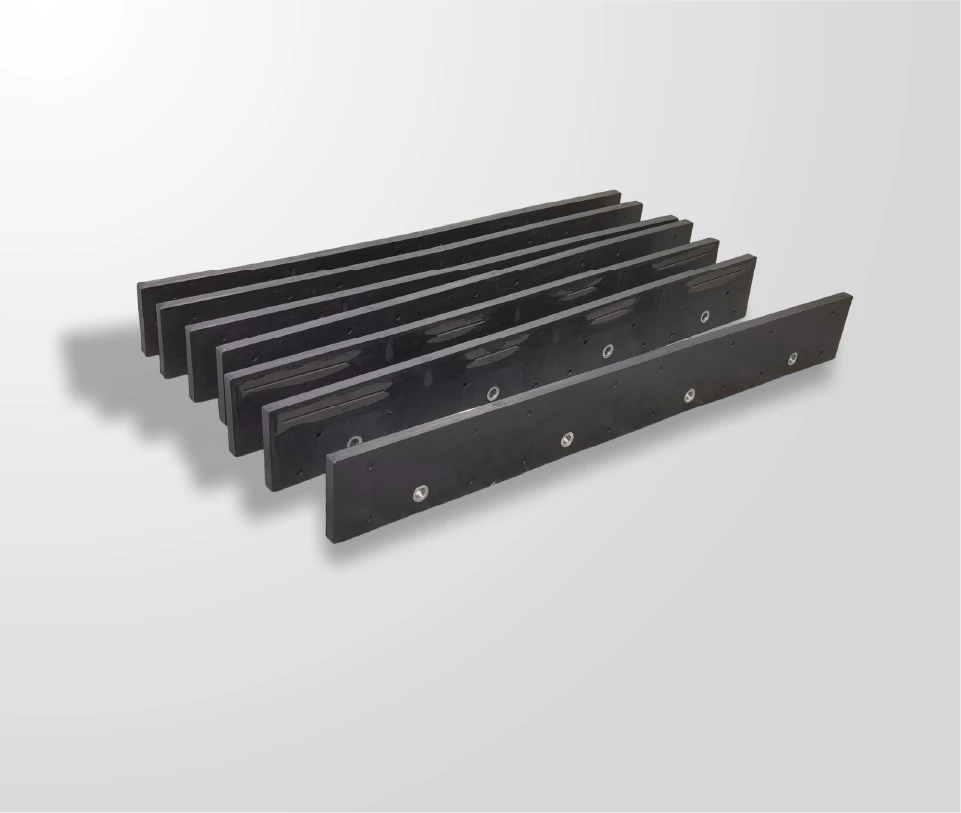
Poly and UHMW: quiet scraping and gravel limits
Poly edges shine where residents complain about steel scream at 3 a.m. They mark less and shed wet snow on lots. Limits: abrasive aggregate, hard ice, and heat from aggressive dry scrape on bare pavement. Do not treat poly as a highway carbide substitute. Contractors who run poly as the only edge for a mixed book will eventually meet a glaze night they cannot cut.
Hybrid setups: carbide with covers
Carbide-and-cover stacks put a sacrificial steel or cover in front of the carbide face so the first strike and some abrasion land on the cover. Aftermarket educators describe this as a wear-sharing setup; the engineering idea is simple, protect inserts and share grit load. Specify cover thickness, bolt engagement, and replacement triggers so the cover does not unload the carbide or hide a spent insert line.
FHWA road-weather framing still applies when you justify hybrids to finance: availability during events beats aisle price — FHWA Road Weather Management.
Cost per lane kilometre worksheet fields
| Field | Source | Notes |
|---|---|---|
| Delivered edge price | Quote / invoice | Include freight and duties |
| Edges per season | Work orders | Split by route class |
| Labour hours per change | Shop clock | Use loaded shop rate |
| Truck downtime cost | Finance / ops | Even a planning figure helps |
| Lane km cleared | Telematics / sheets | Fix the definition before comparing years |
| Hardware consumed | Parts issues | Salt often raises this line |
Competitors often omit a simple cost-per-lane-kilometre table and sectional/JOMA/cover options. Capture edge price, labour, downtime, and measured life beside material choice so the snow plow cutting edge decision is auditable.
Purchase price alone will always rank steel first. Cost per lane kilometre is the KPI that makes carbide, rubber-flex, and poly comparable without marketing adjectives.
What SERP product pages omit for fleet buyers
Retail and marketplace listings emphasise price and “fits brand X.” They rarely ask for hole charts, moldboard wear, cover stack height, or route abrasion class. Fleet buyers should demand drawing control, batch IDs, and written fit confirmation, especially on aftermarket Western-style, Fisher-style, or BOSS-style edges where trade shorthand is not a guarantee.
Sourcing discipline for import carbide programmes is covered in the sourcing carbide wear parts guide. Tungsten market context for long-term contracts sits with USGS tungsten statistics.
Matching snow plow cutting edge material to storm frequency
Material charts alone do not pick a snow plow cutting edge. A depot that faces back-to-back lake-effect nights values changeout labour differently than a contractor with two major storms a season. Carbide earns its keep when abrasive asphalt already forces steel changes inside the same storm window; rubber or poly earns it when pavement marking risk outweighs scrape aggression.
Write the decision as surface class × expected storm nights × available bay labour, then test one route class before locking the whole yard to a single material.
Compare the edge families by machine: truck plow edges, skid steer blades and grader blades.
FAQ
What is the best material for snow plow cutting edge?
There is no single best material. Match the snow plow cutting edge to surface, ice nights, noise rules, and changeout labour. Carbide usually wins on abrasive asphalt when downtime is expensive. Steel is cheapest to buy but costly to change mid-storm. Rubber and rubber-flex protect decorative pavement. Poly quiets lots but struggles on packed ice. Build a surface-to-material map before locking a season order.
Where can I find a replacement cutting edge for my snow plow?
Start with the worn edge: photograph both faces, measure length, thickness, and centre-to-centre bolt spacing, and note plow brand or moldboard style. OEM dealers, aftermarket carbide plants, and wholesale distributors can all quote replacements when those fields are complete. For import or private-label buys, attach a sketch or sample rather than a brand nickname alone. Confirm hole pattern before ordering so the new snow plow cutting edge bolts without field drilling.
What are snow plow cutting edges made of?
Common snow plow cutting edges use high-carbon or abrasion-resistant steel, tungsten carbide inserts in a steel carrier, rubber or rubber-flex strips, and polyurethane or UHMW poly. Hybrids pair carbide with steel covers or rubber segments. Material choice should follow surface protection and abrasion, not catalogue hero images. Ask suppliers for carrier steel callouts and insert geometry when comparing carbide options.
What is a trip edge on a plow?
A trip edge is a spring- or linkage-loaded cutting edge section that yields when the plow hits a curb, manhole, or frozen ridge, then returns. It protects the moldboard and truck from shock loads. Trip edges still wear like other cutting edges and need the same material and bolt-pattern decisions. Specifying carbide or rubber on a trip edge does not remove the need to measure hole spacing and thickness for replacement parts.
Request Specs or a Quote
Drop a line to [email protected] with your plow make/model and edge details (length, thickness, bolt pattern) plus notes on route surfaces. Photos of the worn edge are just as useful. We generally reply within one working day in English or Chinese, and the quotation confirms lead time and MOQ for the product family instead of a general timeline on this page.