When an insert leaves its carrier, the instinct is to blame the carbide. In almost every case we investigate, the carbide did its job and the joint failed. Understanding why turns an unpredictable failure into a preventable one.
1. The heat profile was uneven
Brazing and welding both depend on getting the whole joint to temperature together. If one end of an insert heats faster than the other, the filler flows unevenly and one corner is bonded while the rest is only tacked. It survives the workshop and fails on the road.
Induction heating is used for exactly this reason: the heat is applied across the joint rather than at a point, so the filler wets the whole interface.
2. The steel was not clean enough
Oil, mill scale, rust and moisture all prevent a filler from bonding. A joint that looks sound can fail weeks later because the bond was to a film of contamination rather than to the steel.
3. Residual stress from cooling
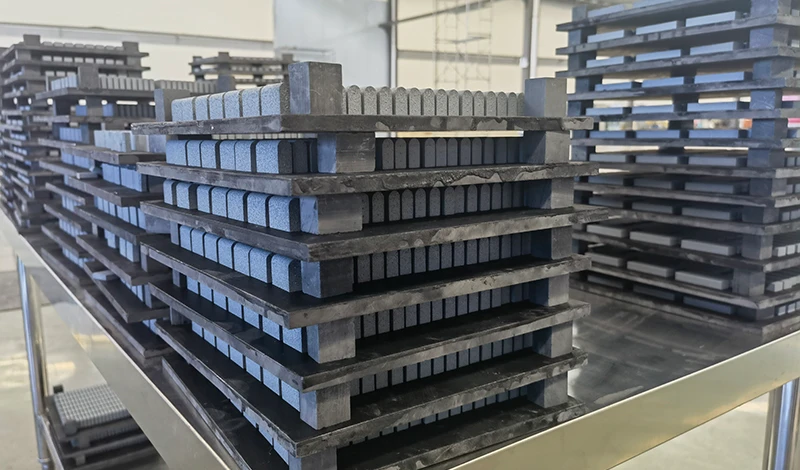
Carbide and steel cool at different rates. Without a controlled cooling and annealing step, the joint carries built-in stress from the moment it is made. Combine that with a cold winter and the stress finds a way out — usually by cracking the bond or the carbide itself.
4. Impact beyond the design envelope
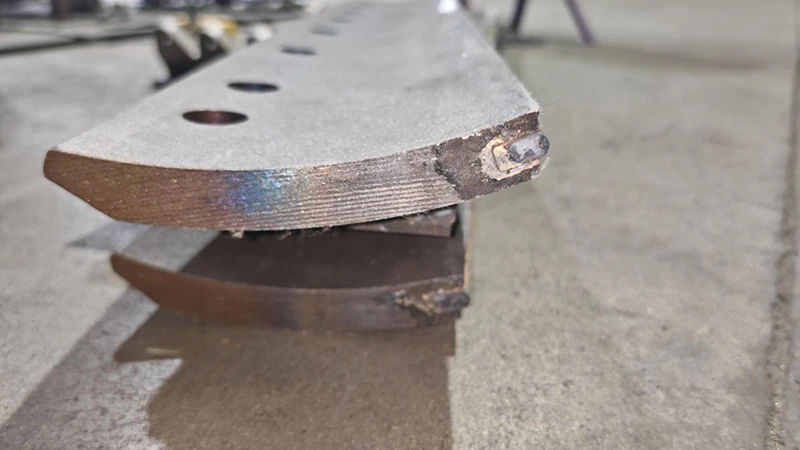
An edge can be perfectly made and still lose an insert if it is run with excessive down-pressure into a kerb, a manhole frame or a submerged rock. Impact damage leaves a different signature: a single isolated failure with a chipped insert face, rather than progressive loss along the edge.
| What you see | Most likely cause | What to check |
|---|---|---|
| Several inserts missing in a row | Heat profile or contamination | Welding parameters and steel preparation |
| Inserts missing at the ends only | Uneven heating at the edge of the run | Coil placement and dwell time |
| Cracked inserts still in place | Stress or a grade that is too hard | Cooling cycle and impact conditions |
| One isolated missing insert | Impact damage | Route obstacles and down-pressure |
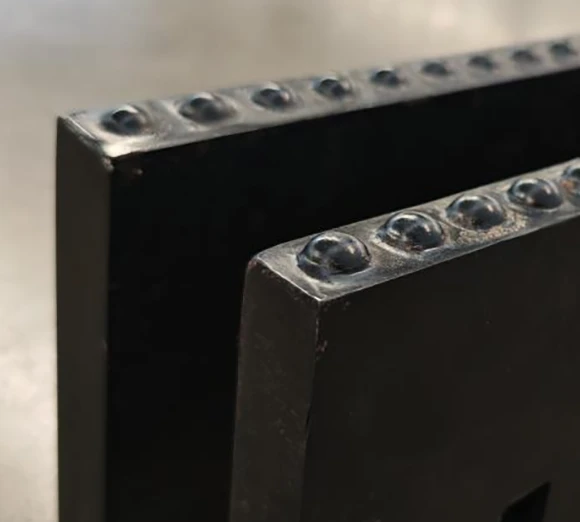
Before accepting a repaired edge, look at the filler line along the joint. It should be continuous and equal along the insert. A thin end or a visible gap is where the insert will leave.
What we do about it
Every welded run at SENTHAI has recorded parameters, and the joint is inspected at intervals rather than only at the end. When a customer reports insert loss, the batch reference tells us which run produced the edge, so the answer is evidence rather than opinion.
Is it worth re-welding a blade that lost inserts?
Sometimes. If the carrier is otherwise sound and the lost inserts are isolated, repair can extend its life. If inserts are being lost progressively, the carrier is usually near the end of its useful life.
Does a harder carbide grade reduce insert loss?
No. Harder grades resist abrasion but tolerate less impact, and hardness makes bond stresses worse. Insert retention is a joint-quality question, not a hardness question.