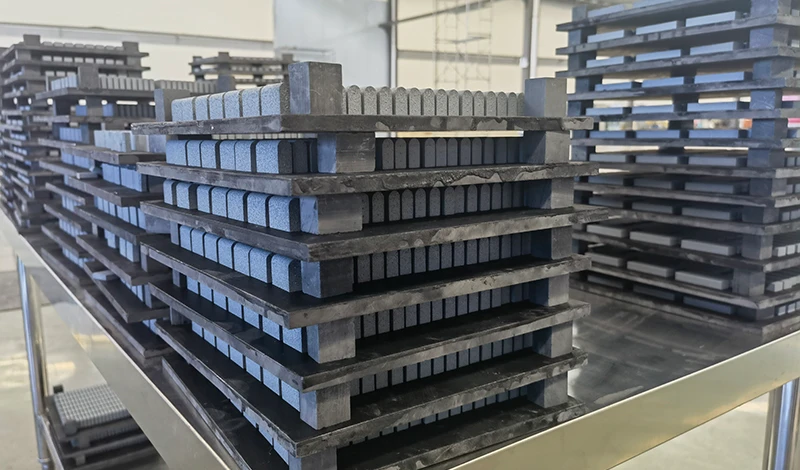
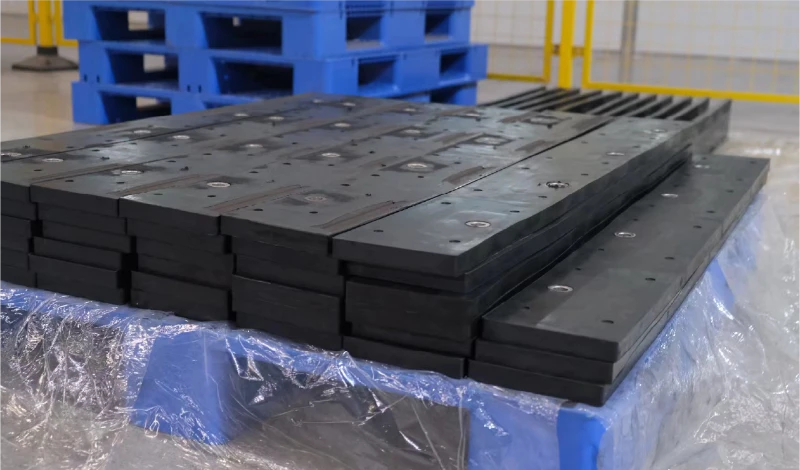
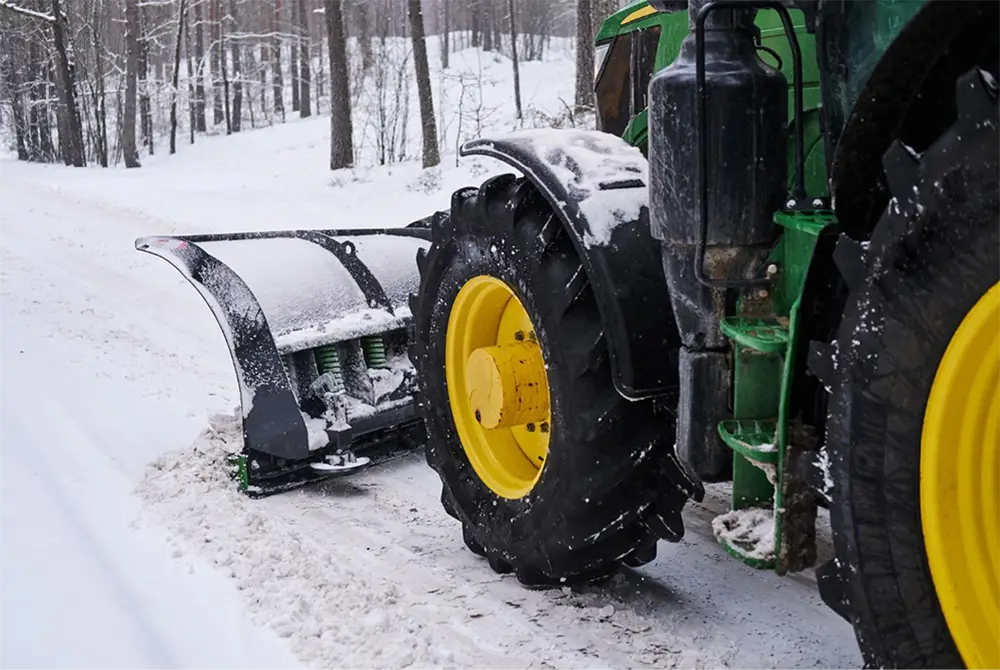
A blade arrives with two segments worn through and a tear in the rubber base along one joint. The workshop has a choice that will shape the fleet’s blade spend for the next several seasons, and the deciding evidence is not the segments. It is the base underneath them.
This guide works through which damage can be repaired, which damage ends a blade’s life, how the arithmetic between repair and replacement actually runs, and the checks a workshop should complete before committing either way.
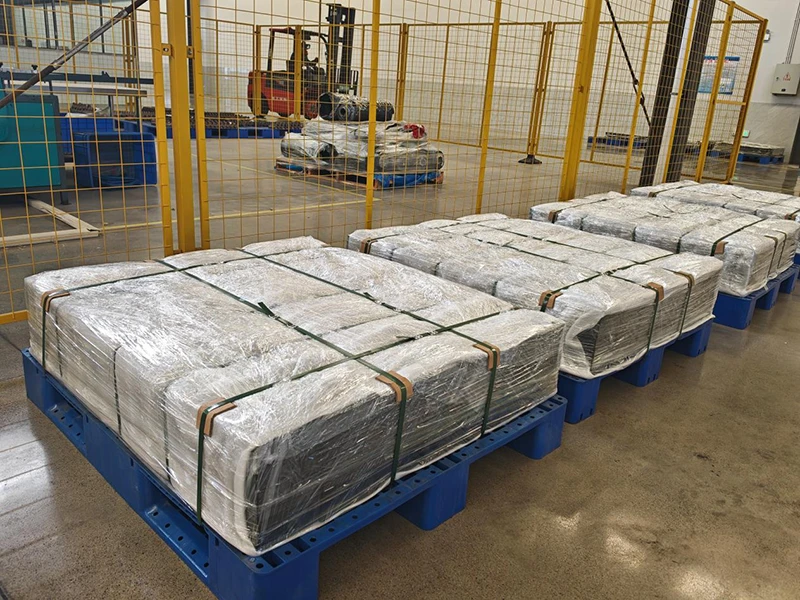
Damage types that rubber flex blade repair can fix
Repair works when the structure is sound and the damage is confined to the consumable parts.
Four conditions fall into that category, and each is a parts job rather than a rebuild. Worn segments are the normal case: the insert row has reached its wear face limit and the segments are replaced. Isolated insert loss on one or two segments with an otherwise sound base is the second, and it is usually a re-segmentation rather than a full row. Localised rubber damage at a joint, where the tear does not run along the mounting face, is the third. Fastener and hole wear is the fourth, provided the mounting bar itself is still straight and the holes have not opened up.
The common thread is that in every one of those cases the repaired row can be aligned along a sound reference. A workshop that can measure base thickness, check the holes and confirm the bar is straight has everything it needs to decide.
Damage that ends the blade’s life
Four failure modes are terminal, and continuing to repair around them simply moves the cost from the blade to the route. A base that has cracked through its thickness has lost the flexibility the design depends on; a repaired row fitted to it will not conform, and the joints will open again. A base that has taken a permanent set, visible as a bulge or a section that no longer lies flat, has the same problem in a less obvious form.
Separation of the rubber from the mounting structure along a long run is the third, because it cannot be re-bonded reliably in a fleet workshop. The fourth is distortion: a bent bar or elongated mounting holes mean the row can no longer be clamped evenly, and no amount of new segment hardware will correct that. In each of those cases replacement is the honest answer, and the workshop record is what shows the fleet why.
Cost of repair versus replacement
The comparison is not parts against parts; it is a defined service interval against another. Repair costs the segments and hardware plus the workshop hours for the work, and it returns a blade whose remaining base life is unknown but measurable. Replacement costs a complete assembly plus the same hours, and returns a known starting condition. The parameter that decides between them is how far through its life the base is, because that determines how soon the same decision returns.
| Evidence | Points to repair | Points to replace |
|---|---|---|
| Base thickness | Above the minimum at all measured points | At or below the limit anywhere |
| Cracking | Surface only, at a joint | Through the base, or along the mounting face |
| Mounting holes | Round, within tolerance | Elongated or distorted |
| Bar straightness | Within tolerance | Bent or twisted |
| Row condition | Local wear or isolated damage | Whole row near its limit |
Partial re-segmentation practice
Re-segmentation is a legitimate way to use the remaining material in a row, and it works when the rules are followed. Replace only the segments that have reached the limit, keep the replacement identical in length, thickness and insert pattern to the ones beside it, and re-check the cutting line after tightening. A row that mixes a thicker replacement segment with thinner survivors will not hold a straight line, because the new segment sits proud at the contact face.
Position matters as well. Move the survivors away from the highest-load positions if the pattern allows, so the new segments start their life where wear is most predictable, and retire the segments that have already been rotated once. Record which positions were replaced, because that record is what makes the next wear comparison meaningful. The fitting routine itself is the same one used for a new row and is set out in installing JOMA style segments.
Bond and rubber integrity checks
The integrity checks take minutes and they are what separate a repair that lasts from one that returns. Measure the base thickness at several points along each segment and compare against the documented limit. Look for cracking with the segment slightly deflected, because a crack that is invisible when the base is flat can open under load. Check the bond line where the insert sits in the base, looking for a dark line or movement that indicates separation.
Then check the mechanical reference: the holes should be round and the bar straight. A workshop that has a straightedge and a caliper can complete the whole assessment, and the same measurement discipline that supports incoming inspection, described in the quality control framework, is what makes the fleet’s own records comparable from season to season.
Warranty and liability implications
A repaired blade is a different object from the delivered product, and the paperwork should reflect it. Where a blade is re-segmented with parts that match the original specification, the repaired assembly generally continues in service under the terms that apply to the parts supplied. Where the repair mixes constructions, or where the base was already outside tolerance before the work, the basis for any later claim becomes difficult to establish.
The practical answer is procedural: record what was replaced, with the part identification and the date, keep the record with the machine, and confirm with the supplier which repairs preserve the terms on that assembly. The ordering and documentation terms that apply to shipped parts are described in warranty, shipping and ordering terms.
Workshop capability requirements
Not every repair belongs in every workshop, and the requirements are modest but specific. Lifting and support equipment that can hold a segment row flat is the first, because handling damage during the repair costs more than the parts. A calibrated torque wrench and new fasteners of the specified grade are the second, since a re-segmented row is only as good as its clamping.
The third is measurement: a caliper, a straightedge and a feeler gauge, plus the discipline to record what they show. The fourth is a clean mounting face, which is a workshop habit rather than a tool. Where any of those are missing, the fleet is usually better served by ordering replacement segments and fitting them than by attempting rework on the base itself.
Decision checklist
The checklist below is the sequence a workshop can follow in a single visit. It ends with a recorded decision, which is the part that makes the next season’s budget defensible.
- Measure base thickness at several points on every segment and compare against the limit.
- Inspect for cracking with the base deflected, not flat.
- Check the insert bond line for separation or movement.
- Check hole roundness and bar straightness.
- Decide: re-segment, full row replacement, or complete blade replacement.
- Record the measurements, the parts used and the date against the machine.
- Re-check torque and cutting line after the first working shift.
Maintenance practice at fleet level is also covered in the operator-facing material published by the Snow and Ice Management Association and the equipment guidance published by the Association of Equipment Manufacturers, with research on how surfaces and equipment interact published by the Transportation Research Board. Material and hardness claims behind the components can be referenced to published test methods from ASTM International, and where mechanical clearing reduces the de-icing material required on a route, the environmental case is documented in the EPA nutrient pollution material.
The conclusion is that repair decisions belong to the base, not to the segments. Measure the structure, apply the terminal conditions without sentiment, and re-segment only where the reference is still sound. SENTHAI supplies replacement rubber-flex segments, complete JOMA style blade assemblies and carbide wear parts produced in Rayong, Thailand, with fitment confirmed against the mounting pattern.
FAQ
Can a rubber flex blade be repaired, or does it have to be replaced?
It depends on the base rather than on the segments. If the rubber base and the mounting bar are sound and within tolerance, worn or damaged segments can be replaced and the blade returns to service. If the base has cracked through, taken a permanent set or separated from the mounting, the blade is finished, because a repaired row on a distorted base will not hold alignment.
What is re-segmentation and when is it worth doing?
Re-segmentation is replacing only the segments that have reached their limit while keeping the sound ones in service. It is worth doing when the wear or damage is local, when the remaining segments are within tolerance and of the same construction, and when the blade will be used again on the same route. Where the whole row is close to its limit, replacing the set is usually cheaper than two visits to the workshop.
Does repairing a blade affect its warranty?
It can, and the terms should be checked before any work is done. A blade re-segmented with parts that do not match the original specification is no longer the delivered product, and a failure after that work is difficult to attribute. Keep the invoice and the parts identification with the machine record, and confirm with the supplier which repairs preserve the terms for that assembly.
What should a workshop measure before deciding to repair?
Four things: base thickness at several points, the length and depth of any cracking, the condition of the mounting holes, and the straightness of the bar the segments clamp to. Those four measurements decide whether a repaired row can be aligned and will hold. Segment wear alone never decides the question, because segments are the part the workshop is going to replace anyway.
Send the blade model, the pattern and photographs of the damage. The SENTHAI engineering desk will confirm whether the assembly can be re-segmented, quote the matching segments and hardware, and specify the measurements to record after the repair.